

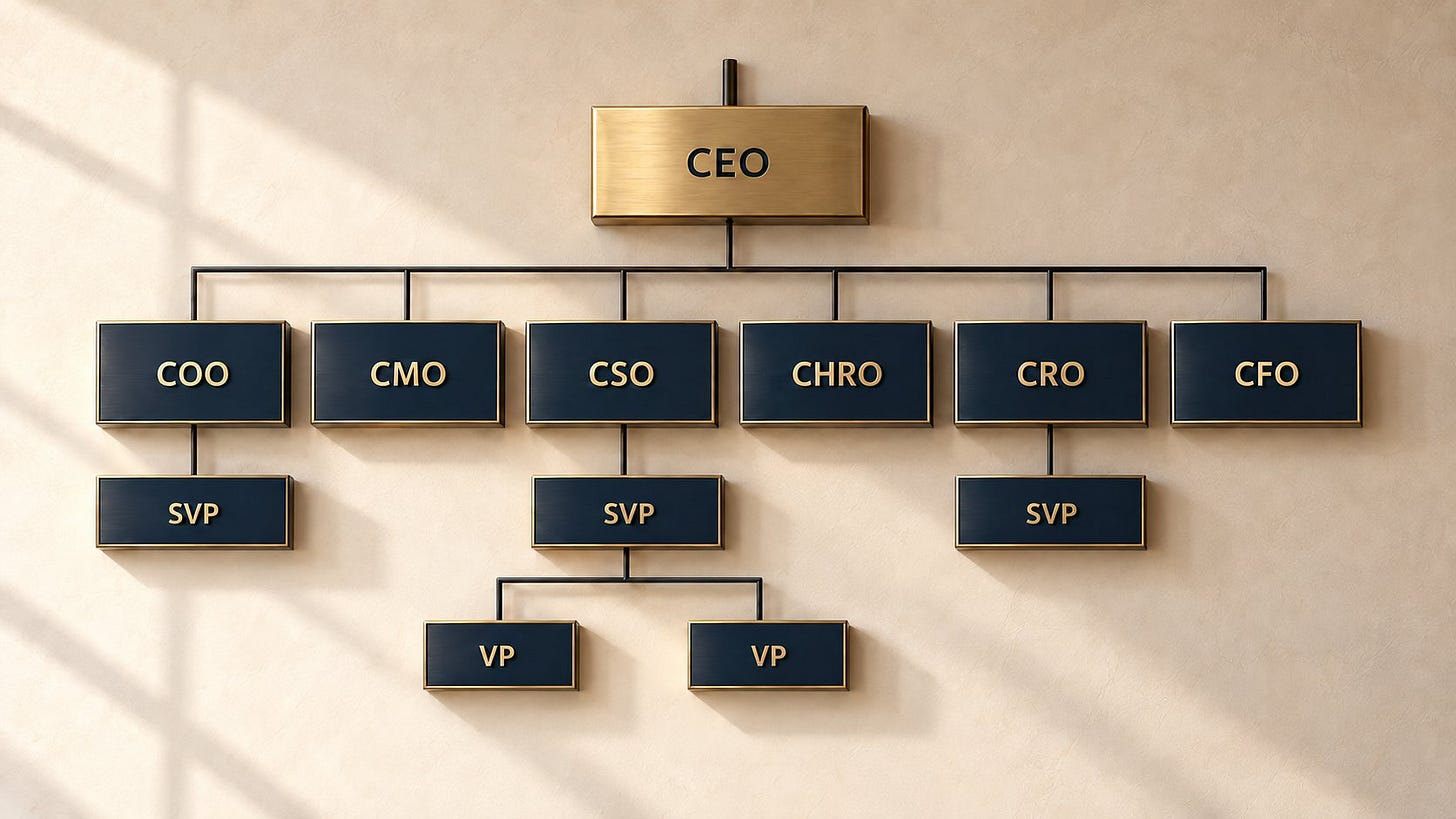
Your org chart has gotten out of control because you keep using titles to make uncomfortable conversations go away.
Someone wants recognition. Someone is threatening to leave. Someone has been around longer than the person you just hired. Someone thinks reporting to a former peer is beneath them.
So you add a title, invent a department, or create another layer. Everyone feels better for a while. Then the next person wants the same treatment.
Eventually, the chart becomes a record of everyone you were afraid to disappoint.
The business still needs decisions made, clients served, people managed, and money earned. But now it has to get that work through a structure built around keeping people happy. You’ve promised status without doing the harder work of deciding who is actually equipped to lead.
A title cannot do the job
Being excellent at your current job doesn’t automatically qualify you for the next one. A strong account person may struggle to run a department. A talented creative may have no experience managing a budget, developing managers, or making a staffing decision that disappoints someone they like.
Those skills can be learned. But they need to be learned, and the title itself does none of the teaching.
When you promote someone because they’re valuable, loyal, or unhappy, without honestly assessing their readiness, you put them in a job they may not know how to do. Then you act surprised when they avoid difficult conversations, escalate routine decisions, or focus on the work they already know.
You helped create that situation.
There’s a different problem when someone has the ability but never receives the authority. They’re supposedly running a department, yet every hire, budget decision, and disagreement still has to go through the founder. They carry the title while someone else keeps the job.
Both situations become expensive. Decisions stall, responsibilities overlap, and capable people spend their time working around a structure nobody wants to challenge. You end up paying for leadership while still supplying it yourself.
And then there’s the C-suite
This is where title inflation gets especially ridiculous.
“Chief” should mean something about the scope of the job, the judgment required, and the consequences the person owns. It should require a view of the entire business, including the parts that don’t benefit their own department.
An executive has to understand why a popular hire may be unaffordable, why an exciting client may be unprofitable, and why their team’s preferred answer may be wrong for the company. They need to make difficult calls and live with the results.
Being the most senior person in a function doesn’t establish that capability. Neither does tenure, a great client relationship, or the fact that a competitor gave someone else the same title.
And yet a chief title can become the retention offer when leadership runs out of other things to say.
Now you have another executive who needs to be consulted, included, and accommodated, without necessarily having another person who can carry the responsibility. The founder remains the final stop for everything, and the executive team becomes another group the founder has to manage around.
There are legitimate reasons to add chief roles as a business grows more complex. Appeasing someone who wants to feel more important is a lousy one.
The uncomfortable question is how much of your structure exists because the business needs it, and how much exists because you couldn’t bring yourself to tell someone they weren’t ready, the role wasn’t needed, or the authority wasn’t theirs.
An org chart built to keep the peace leaves the difficult conversations waiting. Eventually, the business pays for every one you avoided.
Want Monday Morning Business Tips in your inbox first? Sign up at the bottom of finstratcfo.com.
Thanks for reading FinStrat CFO! Subscribe for free to receive new posts and support my work.
Originally published on Substack.

Comments