

Why this works
Thirty years in the numbers. Real hours in the tools.
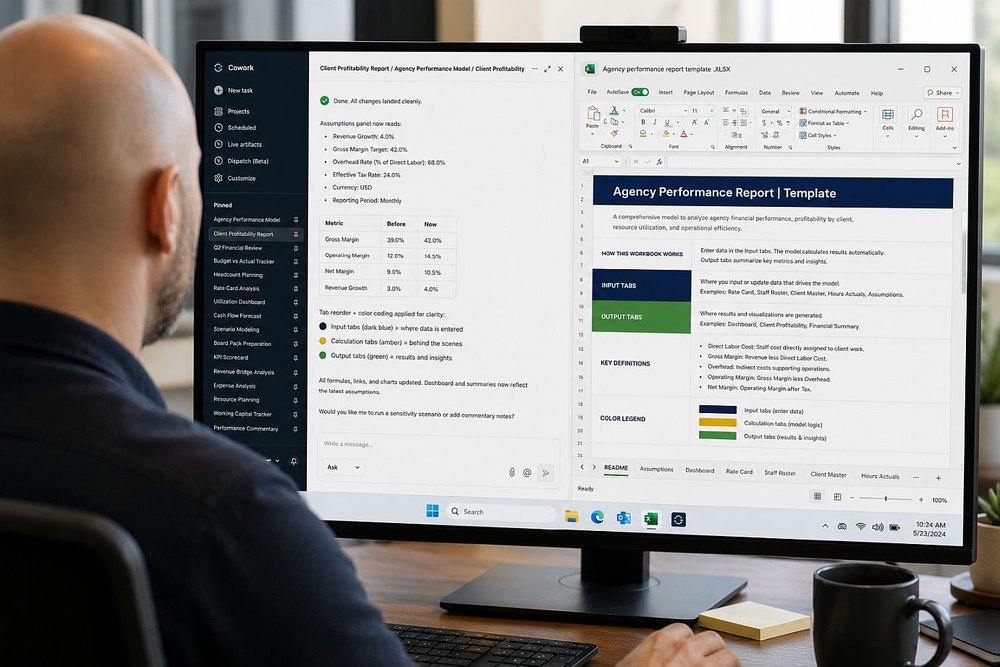
Most people approaching AI for finance come at it from one direction or the other: a technologist who has learned enough finance to be dangerous, or a finance professional who is cautious about tools they don't fully trust. I'm neither. I've spent thirty years in the numbers, closing the books, building the forecasts, sitting in the room for the hard conversations about margin, cash, and what a business can actually afford. And I've spent real hours since then building and stress-testing the AI workflows now available to do parts of that work more efficiently.
That combination is the entire point. Knowing finance deeply enough to spot when an output is subtly wrong, not just obviously wrong. Knowing which numbers can move fast and which ones need a second set of eyes before they reach a leadership team or a board. Knowing that the tools are genuinely useful, and exactly where their usefulness runs out.
How we can work together
Three formats, from a single session to embedded help.
Speaking & workshops
A practical session for leadership or finance teams on what AI can and can't do for financial reporting, forecasting and analysis, grounded in real examples, not hype.
Small-group coaching
Hands-on sessions, typically two to three participants, working through your actual tools and workflows rather than a generic curriculum.
Implementation support
Direct, embedded help standing up AI-assisted workflows for reporting, budgeting or vendor analysis, built around your existing systems and data.
Built, not just talked about
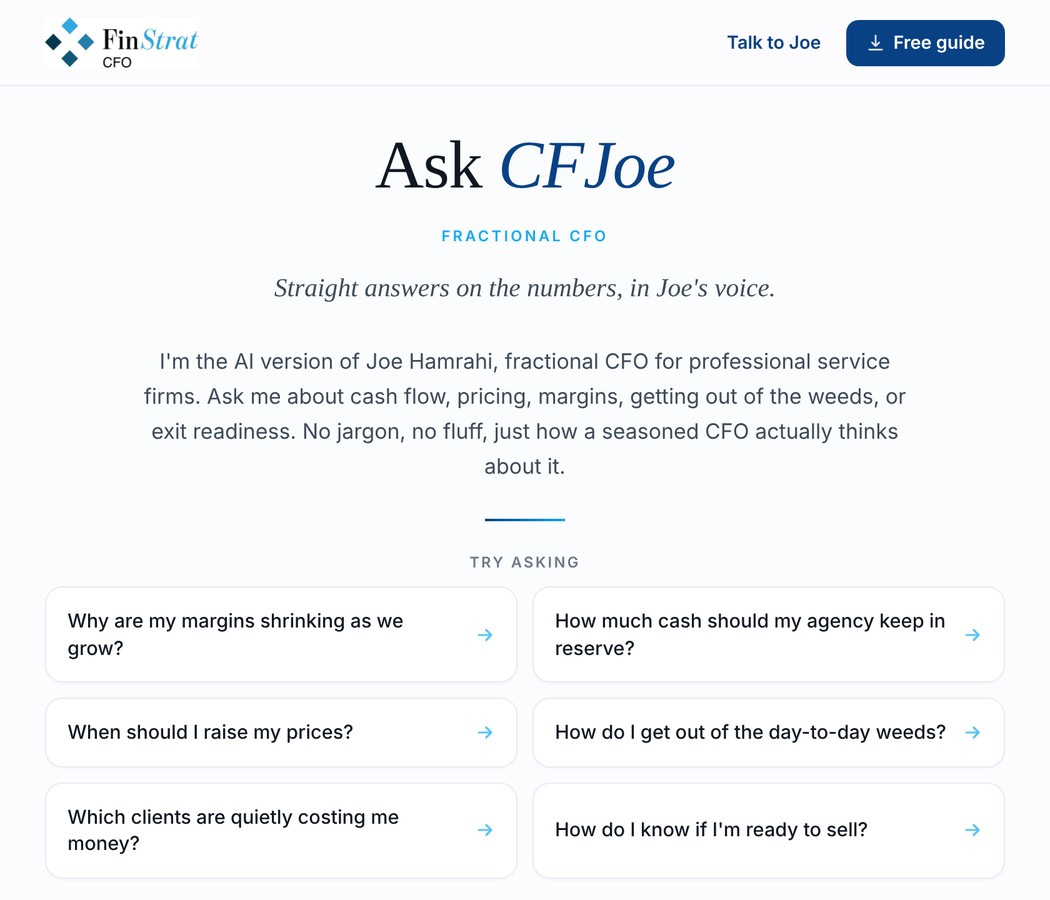
I built one. Try it.
Ask CFJoe is my own AI. It answers finance questions in my voice, the way I actually think about margins, cash, pricing and exit readiness. It's the same judgment-first approach I bring to a finance team: get everything the tools can give you, and know exactly where their answers stop.
General insight in Joe's voice, not personalized financial, legal or tax advice.
Panel discussion
Why "proprietary AI" is mostly marketing.
I hosted a panel on what's actually driving AI adoption at agencies, and it isn't the flashy tools holding companies love to announce. The real advantage comes down to data and process, not access to the latest platform. Watch the clip for the panel's take on why the playing field has genuinely leveled for independent and mid-sized firms.
Curious what AI could do for your finance work?
Tell me what your team is working with and where it's getting stuck.
Fractional CFO for professional service firms.